
Still Biting

Steve Nash on
Writing the Animal Tale Today
*
Animals have long spoken for us. Orwell understood this. The genius of Animal Farm does not lie in the invention the talking beast fable. Writers such as La Fontaine, Kipling, and Swift had long entrusted animals with human truths. What Orwell achieved was to refine the form for modern politics. While earlier allegories could be expansive or even whimsical, Animal Farm stripped power to its barest language. Ideology became instinct, slogans became brays, and the revolution consumed itself with disarming clarity. Orwell’s pigs were not playful stand-ins. They were Stalin, Marx, and betrayal, rendered in trottered realism. And even now, the book still bites.
The animal literature tradition is vast. Aesop’s foxes delivered prudence. Kipling’s jungle stories dressed empire in evolutionary inevitability. Beatrix Potter’s waistcoated creatures, charming though they remain, often operated at the edge of respectability or rebellion. Behind the surface gentleness, there has always been weight. Black Beauty gave voice to suffering before animal rights had a vocabulary. Watership Down combined myth and ecology. Even The Animals of Farthing Wood, a television staple for children of my generation, offered an early education in displacement, state violence, and the fragility of sanctuary.
Animal literature has always had the capacity to disarm. Readers let their guard down, only to be confronted with the sharp edge of moral or political insight. Anthropomorphism allows for a kind of estrangement. In reflecting ourselves through fur, claw, or hoof, something essential is often revealed that might otherwise be resisted. Orwell did not invent the form, but he refined it by removing its sentimentality. His animals were not there to amuse. They were there to expose.
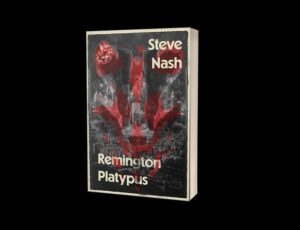
My own novel, Remington Platypus, continues in this tradition but turns away from overt allegory. The animals in the novel speak, but only as a matter of narrative function. They do not moralise or explain. They suffer, misread one another, and act out of instinct as much as intention. The story begins in a grim and fraying London, where the systems that shape life, political, technological, ecological, are already in a state of decay.
The narrative also shifts to a rural enclave known as the Burrow. While fictional, the Burrow is characterised by a certain northern sensibility. It is inward-looking, wary, and held together by memory and pragmatism. Though there is no direct geography, the cultural topography echoes the real-world North–South divide in England. London is a place of control and collapse. The Burrow is a place of refuge, history, and quiet resentment. If Animal Farm dealt with the failures of revolution, Remington Platypus considers what remains when revolution is no longer even imagined. While not claiming to be a sequel to Orwell’s great work, the animals here are building on past attempts at implementing human systems of control that have failed. What persists are grief, inertia, and small acts of resistance.
We continue to write animals not because they are simple, but because they challenge simplicity. Orwell used them to expose ideology. More recent writers use them to depict its absence. In a time of ecological strain, political fatigue, and regional imbalance, the animal story continues to offer clarity, often in the very places where language fails. Through the often bleak resonances of the animal tale, we can find hope in the repeated folly of human behaviour being laid bare and explicit through the eyes and the words of animals. Perhaps that is why they endure, and still bite.
*
Remington Platypus, by Steve Nash is published by Northodox Press, ISBN13: 9781917005005
Really interesting article and your novel sounds fascinating.