
Rubashov’s Confession
Some background to Koestler’s Darkness At Noon, and Orwell’s later Nineteen Eighty-Four
*
In January 1941 the New Statesman published George Orwell’s review of Arthur Koestler’s recently published Darkness At Noon. In this review, as in his later essay on Arthur Koestler, Orwell is particularly concerned with one subject: it is not Rubashov, the political prisoner, himself, nor the book’s relationship to real events in the USSR. The concern is ‘confession’ – the words ‘confess’ or ‘confession’ occur eight times in the review.
Almost five years later to the month (February 1946) Orwell’s Critical Essays included his extended essay on Koestler, in which he discussed all Koestler’s English language works, including Darkness At Noon. Again, when dealing with the novel Orwell’s concern is confession: ‘confess’ or ‘confession’ occur seven times. And in this case Orwell emphasises the subject with a question and answer:-
‘Naturally the whole book centres round one question: Why did Rubashov confess? He is not guilty … ‘
And Orwell goes on to offer a list of suggested reasons:
‘The confessions obtained in the Russian state trials are capable of three explanations:
-
-
- That the accused were guilty.
- That they were tortured, and perhaps blackmailed by threats to relatives and friends.
- That they were actuated by despair, mental bankruptcy and the habit of loyalty to the Party.’
-
It is at this point that we can break off from these two documents. Orwell can well stand reading himself. Historically, though, this question of confession was one that concerned everyone who was politically aware as Orwell was. It became the subject of an international discussion, but only among those whose minds were open to investigation.
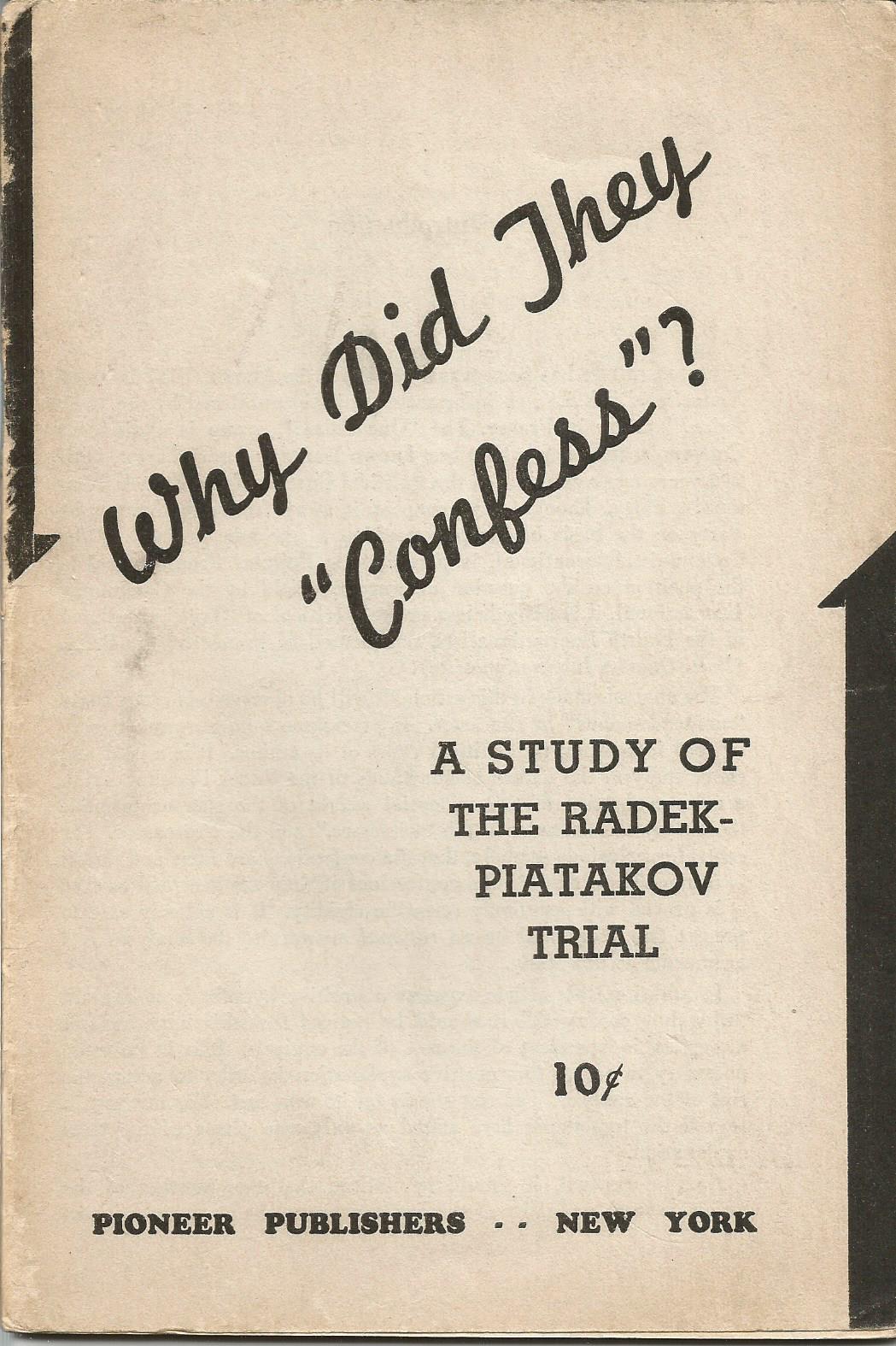
This pamphlet, with its querying title ‘Why Did They “Confess”?’ was published in New York but its origins were European as the first paragraph states:
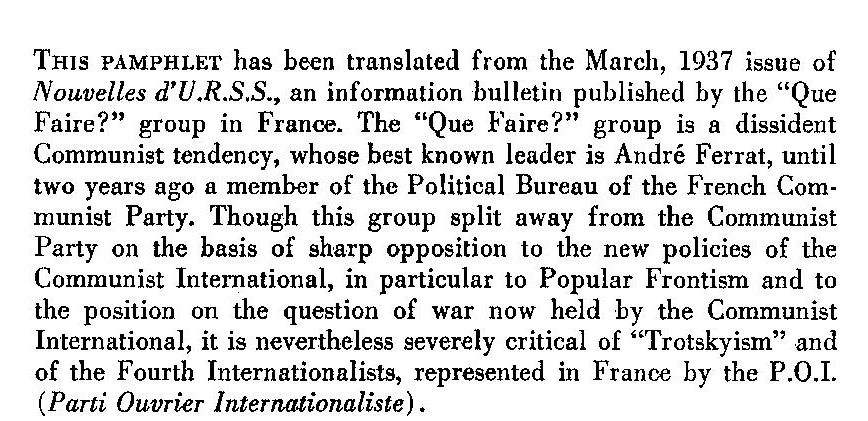
This translation from French to English had been made and published within a month, as the introduction makes clear:

Though in the light of the Orwell’s later experience with the editor/author of the Introduction, his name may be a surprise:

Looking back in his essay on Koestler, that is after the war against Nazism had been won, Orwell wrote ‘If one assumes that the accused in the Moscow trials were made to confess by means of some kind of terrorism, one is only saying that one particular set of revolutionary leaders has gone astray.’ A few lines below that, though, he wrote ‘The notion that so-and-so has “betrayed”, that things have only gone wrong because of individual wickedness, is ever present in left-wing thought’, in which we can hear another theme that would become part of Nineteen Eighty-Four: Goldstein has not been captured and confessed, instead in the Two Minute Hate he is held up to ridicule as he complains that the revolution has been betrayed. There, perhaps, is the difference between the leaders of the revolution – even those who had been expelled – and those who tried to make sense of it. It was Leon Trotsky who wrote The Revoution Betrayed, it was the individuals such as the members of Que Faire group, and Koestler and Orwell, who tried to make sense of why the former leadership confessed.
*
George Orwell read Daphne Hardy’s translation of Darkness At Noon, a more recent edition based on the re-discovered typescript is translated by Philip Boehm.

*
L. J. Hurst
*
Uploaded December 22 2019
Leave a Reply