
Another Ghost: Hilaire Belloc II
Hilaire Belloc
Part Two
*
Introduction. Part One of this article was about Orwell’s references to Hilaire Belloc and briefly discussed Belloc’s family background. Here I look at Belloc’s early life,
Early Life. (Joseph) Hilaire (Pierre Renee) Belloc was born on 27 July 1870 at La Celle Saint-Cloud, a village near Paris. His father, Louis Marie Belloc, was born in 1830; was French with Irish blood; and became a barrister. His mother Elizabeth Rayner (Bessie) Belloc née Parkes was born in Birmingham in 1829; converted to Catholicism in 1864; married Louis Belloc in 1867; and had two children – Marie Adelaide Elizabeth Renee Julia Belloc born in 1868 and Hilaire Belloc in 1870.
The Bellocs fled to England in 1870 because of the Franco-Prussian War. They got out of Paris on the last train that left it before the Germans besieged it. The Bellocs returned to France in 1871 when peace came. They found that German soldiers had pillaged and wrecked the Belloc family home. Louis Belloc died in 1872 aged forty two when his son was two. Although Hilaire was too young to remember these events they gave him a lasting hatred of Germans. In 1872 Bessie Belloc took her two children back to Britain where they lived at Slindon in Sussex. She had inherited enough money to live comfortably but a stockbroker lost it. The Bellocs lived in genteel poverty. Hilaire Belloc came to love Sussex and it inspired many of his writings.
Hilaire studied at the Roman Catholic Oratory School in Edgbaston Birmingham, where his mother had relatives. This school was founded in 1859 by Cardinal (now Saint) John Henry Newman, an Anglican clergyman who had converted to Roman Catholicism. The school moved to Caversham near Reading in 1923 and Woodcote in Oxfordshire in 1941. The Oratory itself remained in the city. Cardinal Newman was born in 1801 and in the 1880’s still occasionally appeared before the Oratory boys. He died in 1890. Hilaire Belloc did not think much of him. Bessie Belloc was an old friend of Newman’s rival Cardinal Henry Edward Manning.
After leaving school Belloc tried to train for the French navy; became a farmer; and then a draughtsman. In September 1889 his sister Marie Belloc met a Californian Catholic widow Mrs Ellen Hogan who was touring Europe with her daughters Elizabeth and Elodie. Marie Belloc arranged for the Hogans to meet her mother Bessie Belloc who introduced them to Cardinal Manning.
Marie Belloc and her mother toured Europe with the Hogans. Hilaire Belloc was touring the French provinces reporting for the Pall Mall Gazette, but in 1890 returned to England, met the Hogans and fell in love with Elodie. Ellen Hogan returned to the USA because another of her children was ill. She left Elizabeth and Elodie in the care of the Bellocs.
Elodie Hogan’s mother wanted Elodie to become a nun. Bessie Belloc thought that Hilaire was too young to marry. In 1891 Elodie returned to California and Hilaire pursued her. Still only twenty he sold nearly all his possessions and went on a steamship to New York ostensibly to visit relatives in Philadelphia.
Belloc travelled across the USA to San Francisco first by train and when his money ran out on foot. He lodged at night at farmhouses and ranches paying by sketching the owners and reciting poetry. He was overjoyed to meet Elodie again but her mother rejected him and Elodie resolved to become a nun. He returned to England heart broken.
Belloc had an article A Last Word on Calderon published in the September 1891 Irish Monthly a Dublin journal. Philip Hermogenes Calderon a painter was born in 1833. His parents were a Spanish Catholic priest who had become a Protestant; and a French woman. Philip Calderon had aroused Catholic hostility in 1891 because of a picture The Reconciliation of St Elizabeth of Hungary which showed her abject and naked kneeling before the altar. He died in 1898 aged sixty four.
In 1891-1892 Belloc did a year’s military service with a French Army artillery regiment. He thus kept his French citizenship. He spoke fluent French but there were problems when he used French Army slang in polite company. While he was serving in France Ellen Hogan died but Elodie still wanted to be a nun as her mother had wished.
Belloc was admitted to Balliol College, Oxford, in January 1893, joined the Oxford Union, a debating society, and did well in debates. His friends included the spy writer John Buchan of The Thirty Nine Steps fame. He was President of the Oxford Union for a term. The June 1893 Contemporary Review carried his article A Conscript’s View of the French Army. He had at least two hundred more articles published over the next forty seven years. In June 1895 he graduated with a first class honours degree in history. He failed to obtain a Fellowship. His debating skills had made him enemies.
Marriage and Family. Elodie Hogan found that convent life did not suit her. She did some journalism in California.
On 16 June 1896 the Napa Journal, a California newspaper, reported that the previous day Hilaire Belloc had married Elodie Agnes Hogan at the Catholic Church of St John the Baptist. The Reverend Maurice Daniel Slattery of Napa, a Catholic priest, had performed the service with the Reverend Jeremiah Joseph Gleeson assisting him. The newly-weds honeymooned at the Blue Lakes and the Occidental Hotel in San Francisco before returning to England.
Hilaire and Elodie Belloc were to have five children. Louis was born in 1898, Eleanor Phillippa in 1899, Elizabeth Marie Yvonne in 1900, Hilaire Anthony Arthur in 1902, and Peter Gilbert Marie Sebastian in 1904.
Early Literary Work. In 1896 Ward and Downey of London published Belloc’s Verses and Sonnets; and Camelot Press published his The Bad Child’s Book of Beasts illustrated by Basil Temple Blackwood (BTB) which is still in print.
From 1897 to 1905 Belloc had fourteen more books published including comic poetry such as The Modern Traveller (1898) illustrated by BTB which Orwell quoted from, and Cautionary Tales for Children illustrated by BTB which is still in print; books about France including lives of the revolutionaries Danton (Charles Scribner’s Sons, New York 1899), and Robespierre (Nisbet, London, 1901); novels; travel books; and Catholic religious apologetics.
Basil Temple Blackwood was born Ian Basil Gawaine Hamilton-Temple-Blackwood in 1870; studied at Harrow and Balliol College, Oxford where he and Belloc were friends; was a British colonial official in South Africa and Barbados; became a civil servant in Britain in 1910; was commissioned in the 9th Lancers in 1914; was badly wounded on the Western Front in October 1914; and was killed in a night raid near Ypres on 4 July 1917 aged forty six.
The Politician. Hilaire Belloc was naturalised a British subject in 1902. In 1906 he bought King’s Land, a partly medieval rambling brick home in Shipley near Horsham in Sussex. He was the Liberal parliamentary candidate at Salford South in Lancashire at the 1906 General Election. He was asked by a heckler at a meeting if he was a papist. He replied that:
Gentlemen I am a Catholic. As far as possible I go to Mass every day. This (taking a rosary out of his pocket) is a rosary. As far as possible I kneel down and tell these beads every day. If you reject me on account of my religion I shall thank God that he has spared me the indignity of being your representative. The audience cheered.
Hilaire Belloc got 4,230 votes. His Conservative opponent James Grimble Groves, a brewer, got 3,378. At the January 1910 General Election Belloc got 3,952 votes and was re-elected. His Conservative opponent Clement Anderson Montague Barlow, a barrister, got 3,636 votes and lost.
Belloc spoke 285 times in the House of Commons in debates and asking questions. He was a Radical Liberal supporting Old Age Pensions, Irish Home Rule and other reforms; but detested the links with the Labour Party forced upon the Liberals when they lost their parliamentary majority in January 1910. He was disillusioned with parliament and did not stand at the December 1910 General Election.
At the December 1910 General Election Clement Anderson Montague Barlow stood again for the Conservatives at Salford and got 3,664 votes. The Liberal candidate Charles Russell, a solicitor, got 3,439 and lost.
Until 1911 MPs were unpaid unless they became ministers. Between 1906 and 1910 Belloc had seventeen more books published including English countryside books such as Sussex illustrated by Wilfred Ball (A and C. Black, London 1906); comic verse such as Cautionary Tales for Children illustrated by BTB (Eveleigh Nash, London, 1907) which is still in print; novels; French history i.e. Marie Antoinette (Methuen, London 1909); and foreign travel.
Two of Belloc’s novels in this period were Mr Clutterbuck’s Election (Eveleigh Nash 1908); and A Change in the Cabinet (Methuen, 1909). Politics provides good material for a novelist or playwright. Aristophanes pioneered political satire in fifty century BC Athens.
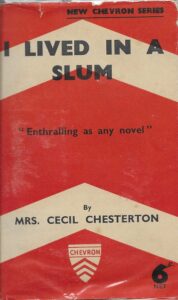
The Journalist. In 1911 Hilaire Belloc and his friend and fellow Catholic G. K. (Gilbert Keith) Chesterton founded a weekly journal The Eye Witness. It later became The New Weekly and in 1925 G. K.’s Weekly. G. K. Chesterton died in 1936 and it became The Weekly Review. Its first editor was G. K. Chesterton’s brother Cecil Edward Chesterton (who died young; his wife kept his name in the public eye).
The Servile State. In 1912 T. N. (Thomas Noble) Foulis of Edinburgh published Belloc’s book The Servile State. A second edition appeared in 1913 and a third in 1927. In it Belloc proclaimed his theory of Distributism.
Belloc argued that capitalism is inherently unstable and means that economic pressures force the poor to work for the rich. He argued that socialism only meant that workers would have to work for government officials not private owners. Some socialists Belloc argued understood this and merely wanted to create a more stable society with them in charge. Others were more naïve. Belloc argued that property should be broadly distributed and that Britain should become a land of peasant farmers and independent craftsmen. His model was the French Catholic peasantry. Belloc and John Ronald Reuel Tolkien were friends and the Hobbits of the Shire portray Belloc’s ideal society.

The Marconi Affair. Guglieelmo Marchese Marconi, an Italian nobleman, discovered Radio (wireless telegraphy) in 1895, and founded the Marconi Telegraph Company in 1897. By 1912 its Managing Director was Godfrey Charles Isaacs whose brother Rufus Daniel Isaacs was the Attorney General and thus a British cabinet minister. In 1912 the Marconi Company was about to obtain a contract for a Radio Station Chain linking the British Empire. The First World War was coming. Land and underwater telegraph lines can be and often were cut.
Rumours spread in France and then in Britain that the contract was obtained through Godfrey Isaacs being a cabinet minister’s brother; and that several British cabinet ministers had used inside advance knowledge to speculate in Marconi shares. In 1913 The New Witness publicised these claims. It named as involved Godfrey Isaacs; Rufus Daniel Isaacs; David Lloyd George the Chancellor of the Exchequer; Herbert Louis Samuel the Postmaster General whose department was responsible for the Marconi deal; and Alexander William Charles Oliphant Murray the Master of Elibank the Liberal Chief Whip.
Godfrey Isaacs sued Cecil Chesterton for criminal libel. Chesterton was fined £100 (about £20,000 in our terms) and had to pay both sides costs. His friends paid his fine and costs. Marconi was a good company and all companies with government contacts use them; but some government ministers had been insider dealing. This case helped sour Belloc and his friends on British democracy and exacerbated their anti-Semitism. For instance, Hilaire Belloc never believed that Captain Alfred Dreyfus a French Jewish officer falsely accused of spying for Germany was actually innocent.
Keep on Writing. Between 1911 and 1914 Belloc had fifteen more books published, apart from The Servile State. They included novels; comic and other poetry; political works; British and French history; British military history and travel, and essay collections. One novel The Four Men: A Farrago, (Thomas Nelson and Sons, London, 1911), is a semi-fictional account of a walk through Sussex with three invented companions, each of who reflects a different side of Belloc’s personality.
Hilaire Belloc, a prominent Edwardian Catholic public figure, loved wine and beer, songs, male friendship, walking and sailing; and was at home in England and France. He loved the beautiful English landscape and the French way of life. The English Catholic community was small and vulnerable. Catholic baiting was still a cottage industry and Catholicism was usually associated with the Irish or the Spanish Inquisition.
Personal Loss. Elodie Agnes Belloc née Hogan died aged forty five on 2 February 1914 at her Kingsland, Shipley, Sussex, family home, after a seven month illness, of liver cancer which had spread to her lungs. She had received the last sacrament from a priest. She left £1,010 probate going to Hilaire Belloc. He wore black mourning for the rest of his life; and turned her room at Kingsland into a shrine which was never opened in his lifetime.
Conclusion. Here I have looked at Hilaire Belloc’s early life. In Part Three I will look at his later life.
G. B. Shaw named the two the great Chesterbelloc!