
Another Ghost: Hilaire Belloc III
Hilaire Belloc
Part Three
*
Introduction. Part one of this article looked at Orwell’s references to Hilaire Belloc; and briefly looked at his family background. Part Two looked at his early life. I left him in 1914 an established and versatile Anglo-French Catholic writer and widower with five children.
The First World War began in August 1914. Hilaire Belloc saw it as a struggle between his beloved Catholic France and Protestant North Germany i.e. Prussia. He regarded the Catholic South Germans and Germany’s Austrian Catholic allies as misguided or renegades. He was much in demand as an optimistic military commentator. His books about the First World War included A General Sketch of the European War: the First Phase (London, Thomas Nelson and Sons, 1915); and A General Sketch of the European War; the Second Phase (Thomas Nelson and Sons 1916). These and other such books sold well and temporarily restored his strained finances.
Captain (later Lieutenant Colonel) Frederick John Roberts MC of the 12th Sherwood Foresters and Lieutenant (later Lieutenant Colonel) John Hesketh Pearson MC DSO edited The Wipers (British Army slang for Ypres) Times a trench journal. They savagely mocked Hilaire Belloc calling him Belary Helloc. The Wipers Times changed its name several times and ran through twenty three editions.
To quote the 26 February 1916 Wipers Times or Salient News:
By Belary Helloc.
In this article I want to show plainly that under existing conditions everything points to a speedy disintegration of the enemy. We will take first of all the effect of war on the male population of Germany. Firstly let us take as our figures 12,000,000 as the total fighting population of Germany. Of these 8,000,000 are killed or being killed hence we have 4,000,000 remaining. Of these 1,000,000 are non-combatants being in the Navy. Of the 3,000,000 remaining we can write off 2,500,000 as temperamentally unsuited for fighting owing to obesity and other ailments engendered by a gross mode of living. This leaves us 500,000 as the full strength. Of these 497, 250 are known to be suffering from incurable diseases this leaves us 2,750. Of these 2,150 are on the Eastern Front and of the remaining 600, 584 are Generals and Staff. Thus we find that there are 16 men on the Western Front. This number I maintain is not enough to give them even a fair chance of resisting four or more big pushes, and hence the collapse of the Western Campaign. I will tell you next week about the others and how to settle them.
Personal Losses. Hilaire Belloc’s oldest son Louis Marie John Belloc joined the Royal Air Force as a Second Lieutenant on 7 May 1918. On 26 August 1918 he was killed in action aged twenty in the Cambrai area of Northern France. His name is listed on the Arras Flying Services Memorial. He left £684 12s 1d probate going to his father.
The RAF was formed by merging the Royal Flying Corps and the Royal Naval Air Service. The death rate for airmen was even higher than that in the infantry. Flying casualties were usually killed in action. Infantry casualties were more often wounded than killed in action.
Hilaire Belloc’s old university friend and former illustrator Lieutenant Basil Temple Blackwood of the Grenadier Guards (see part two of this article) was killed in action aged forty six in a night raid near Ypres on 4 July 1917. His name is inscribed on the Menin Gate at Ypres memorial to the missing.
Another of Belloc’s friends killed in the First World War was G. K. Chesterton’s younger brother Private Cecil Edward Chesterton of the Highland Light Infantry. He fell ill late in that war and died on 6 December 1918 aged thirty nine of nephritis in a British Military Hospital in France. Nephritis a kidney disease is often caused by over prolonged exercise. He left £80 probate going to his widow.
Peace Returns. Between 1920 and 1929 Belloc had forty books and many articles published. They included religious books, political studies, essay collections, French and British history, novels, travel books, and poetry,
In 1920 Constable, a London publisher, published Belloc’s Europe and the Faith. He argued that the Latin countries led by France had preserved the true civilization as the legacy of Rome. He was hostile to Protestantism and ignored Eastern Orthodox countries.
In 1922 Constable published Belloc’s book The Jews. He praised some Jews he had known, had some respect and even admiration for the Jews as a people and denied being anti-Semitic; but argued that the Jews were aliens who cannot be successfully integrated into Christian societies. No mainstream Western publisher would publish such rubbish today.
Archibald Constable founded Constable in Edinburgh in 1795. It published books by many well-known writers including Sir Walter Scott; Bram Stoker whose novel Dracula it published in 1897; and George Bernard Shaw. It is now part of the Little Brown Book Group.
Chatto and Windus published Belloc’s The Mercy of Allah in 1922. He foresaw a rejuvenated Islam. Although the west then had a massive technical lead over the Islamic world he predicted this would not last; and that a united Islam would challenge a divided Christendom. This was prescient to some extent but the Islamic world is as divided as Christendom.
Hilaire Belloc’s The Cruise of the Nona (Boston, Houghton and Mifflin, 1925) was about a voyage Belloc made in a small boat along the British coast before the First World War. It is written in a relaxed, digressive style.
Duckworth of London published Belloc’s Oliver Cromwell in 1927. Jonathan Cape of London published Belloc’s How the Reformation Happened in 1928. Faber and Gwyer published his James II in 1928.
The journal Life and Letters published Hilaire Belloc’s romantic novella Belinda: A Tale of Affection in Youth and Age in 1928. To quote his Dictionary of National Biography entry:
It has a fairy-tale setting in early Victorian England and is written in a sparkling pastiche of the minor fiction of the period. It possesses a delicate charm and tenderness and is quite unlike most of his writing.
Life and Letters was an English literary journal published between 1928 and 1935.
In 1929 Cassell of London published Belloc’s Joan of Arc in 1929; and J. B. Lippincott of Philadelphia published Belloc’s Richelieu a life of the seventeenth century French statesman Cardinal Richelieu. J. B. Lippincott & Co. was founded in 1836 by Joshua Ballinger Lippinctt.
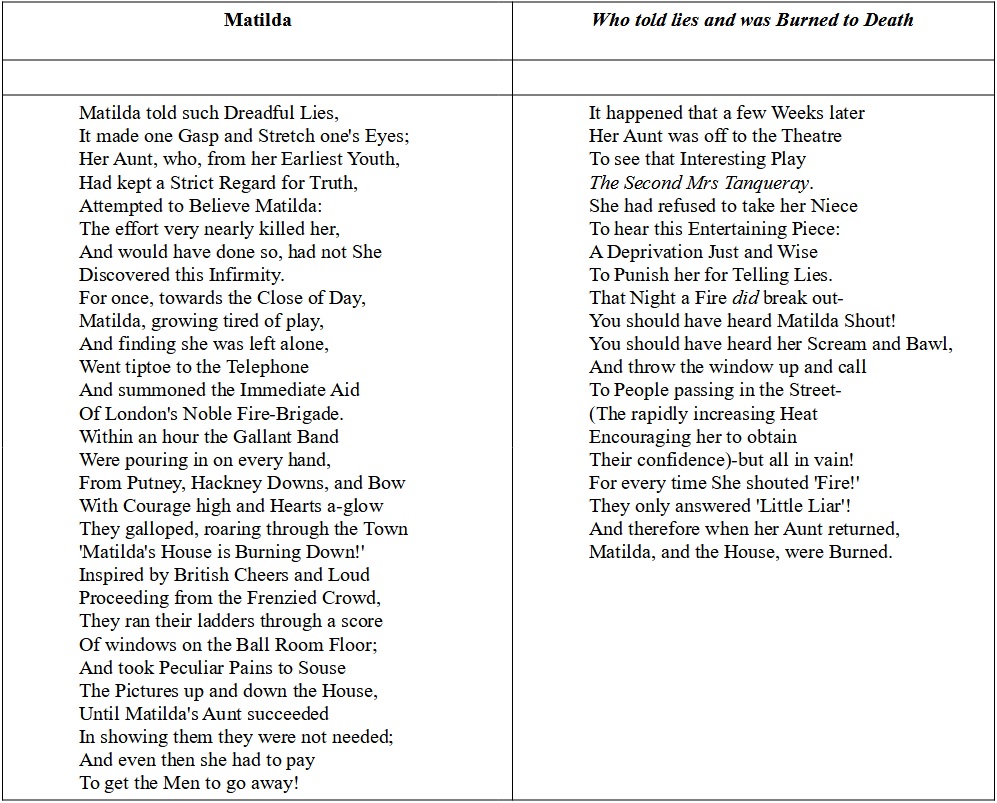
War Approaches Again. Between 1929 and 1939 Belloc had thirty eight more books published including Wolsey (Cassell, London, 1930) a life of the Tudor statesman Cardinal Thomas Wolsey; New Cautionary Tales (Duckworth, London, 1930) a comic poetry collection; and Cranmer (Cassell, 1931) a life of Thomas Cranmer. Thomas Cranmer as Archbishop of Canterbury annulled Henry VIII’s marriage to Catherine of Aragon and decreed that her daughter Mary was born out of wedlock. Archbishop Cranmer accepted Henry VIII’s break with the pope and was the first Protestant Archbishop of Canterbury.
When Mary came to the throne Cranmer cringed and recanted his decree that Mary was born out of wedlock. When he realised she was going to have him burnt alive anyway he recanted his recantation. When the flames were lit he thrust a hand into them and shouted Burn first that hand that wrote that recantation.
Hilaire Belloc had a study of Napoleon published (Cassell, 1932). According to the 20 November Detroit Free Press Belloc approved of Napoleon; but thought that Napoleon’s biggest mistake was the 1804 kidnap from neutral Baden in Germany and execution of the Chevalier Louis Antoine Henri de Bourbon Duc d’Enghien a relative of the French royal family.
Sheed and Ward of London published Belloc’s Characters of the Reformation in 1936. That year Cassell published Belloc’s The County of Sussex.
In the 1930’s Belloc deplored Hitler’s persecution of the Jews. Hilaire Belloc hated Germany which he often called Prussia more than he disliked Jews. He supported Franco. The Spanish Republicans killed eleven Spanish bishops and thousands of Spanish priests and monks. Some of the worst Republican atrocities were the work of the anarchists but not all.
A thorough examination of Belloc’s articles as opposed to his books is beyond the scope of this three part article. In 1938 Belloc had twenty five articles published in the American journal Social Justice. They were on his Distributist economic theories and politics. The June 1938 Social Justice published his articles Communism – the Theory; Communism is Wicked; and Communism has Failed.
Social Justice published from 1936 to 1942 was a mouthpiece for Charles Edward Coughlin, an American Catholic priest, and very anti-Semitic although he denied this; and allegedly hated capitalism and socialism. He was a popular radio broadcaster; but his attempts at political power got nowhere electorally and he was eventually driven out of public life. He died in 1979 aged eighty eight.
World War Two. By 1939 Belloc was old. The writer ‘Beachcomber’ (John (Cameron Andrieu) Bingham (Michael) Morton) wrote that Belloc’s black clothes, black tie and old fashioned stiff, stick up collar made him look like the Frenchman of my boyhood; but his ruddy complexion and the broad square shoulders and massive body gave him the look of an English farmer.
J.B. Morton was born in 1893; commissioned into the Royal Suffolk Regiment in the First World War; was shell shocked; converted to Roman Catholicism in 1922; wrote several books about French history; wrote the Daily Express Beachcomber column from 1924 to 1975; was a friend of Belloc and went on long, strenuous walking tours with him; and died in 1979 aged eighty five.
In January 1940 an American journal The Living Age published Belloc’s article Prussia Not Hitler Must Perish. In December 1940 it published his last article Hitler Loses Round One. By then the RAF had won the Battle of Britain; and Hitler’s Italian sidekick Mussolini had been humiliated by the British Army in North Africa. Eliakim Littell founded The Living Age in Boston, Massachusetts, in 1844. It closed in 1941.
Burns and Oates of London published Belloc’s The Catholic and the War in 1940. His views on the war justified Orwell’s jibe that Belloc thought that it was 1914 again. Burns and Oates was a Catholic publisher founded by James Burns and William Wilfred Oates.
Hilaire Belloc continued writing non war related books such as The Last Rally: A Story of Charles II (Cassell, London, 1940); and On the Place of Gilbert (G. K.) Chesterton in English Letters (Sheed and Ward, London, 1940) a tribute to his fellow Catholic friend G. K. Chesterton who had died in 1936. A Spanish translation was published in Buenos Aires in 1942.
Another Personal Tragedy. Hilaire Belloc’s youngest son Captain Peter Marie Sebastian Belloc of the Royal Marines died aged thirty six on active service of pneumonia on 2 April 1941 in Buchanan Military Hospital near Drymen in Stirlingshire. He was a journalist, editor, reviewer and author and a strong Catholic. He left a widow and three young daughters. He left £3,280 and sixpence probate going to John Bingham Morton, and Francis Reade Hedges, a solicitor.
In 1942 Hilaire Belloc suffered a stroke. He never fully recovered and his flow of writing dried up. On 12 July 1953 he suffered burns and shock after falling into the fireplace at his Sussex residence. He died on 16 July 1953 aged eighty two at Mount Alvernia Nursing Home in Guildford of to quote his death certificate septicaemia from multiple burns. An inquest returned a verdict of Accidental Death.
Hilaire Belloc was buried at the Shrine Church of Our Lady of Consolation and St Francis at West Grinstead where he had regularly attended Mass. He left £7,451 8s 3d probate going to John Bingham Morton.
Conclusion. Hilaire Belloc was given hagiographic obituaries. He was a complex and mixed up man with some unpleasant views. Perhaps he should best be remembered by his comic verse.’Matilda’ is one example.
Leave a Reply