
Why Moses?
Retelling Animal Farm Through the Eyes of Orwell’s Raven
By Dov Citron
*
When I began thinking about adapting George Orwell’s Animal Farm as a one-man piece, one character kept drawing me back: Moses the Raven.
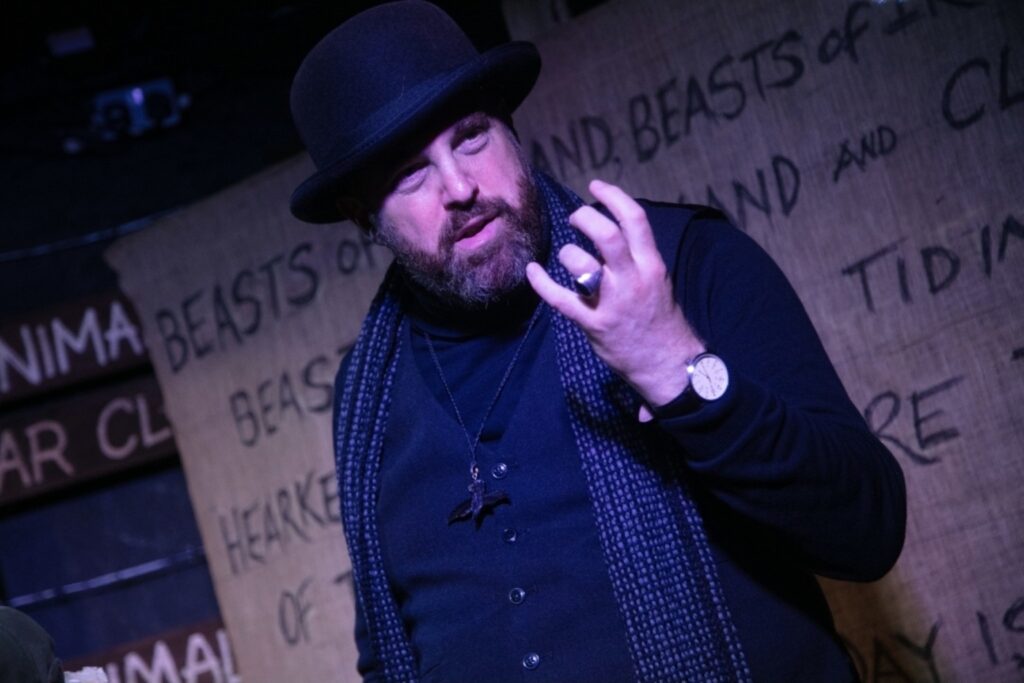
Moses is a curious presence in the novel. He does not build the revolution, fight for it or ultimately govern it. Instead, he talks. He tells the animals about Sugarcandy Mountain, the mysterious place above the clouds where animals go when they die: a land of rest, abundance and freedom from labour.
But Moses is also a raven, and that matters. Ravens are intelligent, adaptable and remarkably long-lived birds. If they avoid predators and disease, they can live for forty or fifty years. In the world of the farm, Moses will therefore almost certainly outlive every other animal. He will have seen generations come and go, and watched the same patterns of hope, betrayal and oppression unfold again and again.
The pigs initially dislike him. His stories offer the animals an alternative source of hope and, perhaps more importantly, an alternative explanation of their suffering. Yet later, when life on the farm has become increasingly brutal, Moses is allowed to return. He is even given a daily ration of beer.
That contradiction fascinated me.
Why does Orwell call him Moses? The biblical Moses leads an enslaved people towards a Promised Land he will never himself enter. Orwell’s Moses also speaks to the oppressed about another place beyond their suffering, but his promised land is always somewhere else — beyond the farm, beyond life and conveniently beyond proof.
I began to wonder what Animal Farm would look like if Moses had witnessed the whole thing.
That became the starting point for Animal Farm: As Witnessed by Moses the Raven.
In my adaptation, Moses becomes both storyteller and survivor. Through him we meet Old Major, Napoleon, Snowball, Boxer and the other inhabitants of the farm. With one actor playing the entire farm, characters emerge and disappear through changes of voice, physicality and simple theatrical objects.
But Moses remains.
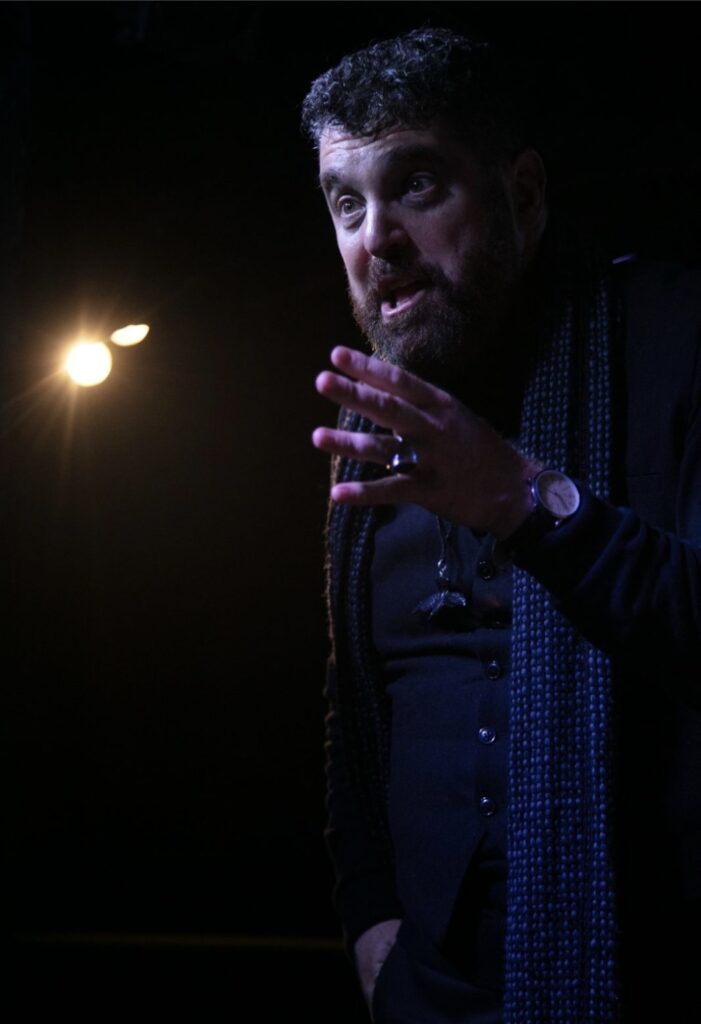
And in my telling, he is not a pet of Farmer Jones, nor a creature trapped by the farm’s power structures. He is liberated: free to come and go, to watch and to remember, but with no stake in the game. He does not belong to the farm, and he does not seek to rule it. That distance allows him to witness what the others cannot, while remaining untouched by the promises and privileges that bind them.
That matters because I became increasingly interested not simply in the mechanics of revolution, but in what happens to belief when political promises collapse.
Boxer believes in work. Snowball believes in revolution. Napoleon understands the usefulness of making others believe. Moses offers belief of an entirely different kind.
And perhaps that is why the pigs eventually tolerate him. He is not one of them, and he cannot be controlled in the same way. But as long as he remains a watcher rather than a participant, they can convince themselves that he poses no real threat.
There is also something unexpectedly circular about bringing this production to Barons Court Theatre. In February 2005 I performed there as Siegfried Sassoon in Stephen MacDonald’s Not About Heroes. Twenty-one years later I am returning to the same intimate room, this time with a piece I have created myself.
At 19, I had actually played Napoleon in a youth production of Animal Farm. Now, rather alarmingly, I have reached the point where I play Napoleon and everybody else.
Perhaps Moses was right after all. Eventually, everything comes around again.
And, as Sassoon himself once wrote:
“As prisoned birds must find in freedom.”
Twenty-one years after playing him at Barons Court, it seems strangely appropriate to be returning there — this time as a raven.
Animal Farm: As Witnessed by Moses the Raven runs at Barons Court Theatre, London, from 29 September–3 October 2026 at 7.30pm.
Click for Show and booking information:
*
Leave a Reply