
A Little Less than a Man
When the First World War ended in 1918 George Orwell (then Eric Blair) was fifteen and at Public School. He had been in his prep school cadet corps and then in the school Officer Training Corps. If the war had continued the eighteen year old Blair could have expected to be conscripted and sent to the Front. Shortly after the Second World War began Orwell wrote about the experience of his present in the light of the past. He wrote:
‘As the war fell back into the past, my particular generation, those who had been ‘just too young’, became conscious of the vastness of the experience they had missed. You felt yourself a little less than a man, because you had missed it. I spent the years 1922-7 mostly among men a little older than myself who had been through the war. They talked about it unceasingly, with horror, of course, but also with a steadily growing nostalgia. You can see this nostalgia perfectly clearly in the English war-books.’
(‘My Country Right or Left‘, 1940)
Orwell, though, in an essay published the same year, but which must have been written before the outbreak of the war, had written more about the ‘war-books’. It was not just ‘nostalgia’ that he noticed:
‘… the books about the Great War were written by common soldiers or junior officers who did not even pretend to understand what the whole thing was about. Books like All Quiet on the Western Front, Le Feu, A Farewell to Arms, Death of a Hero, Good-bye to All That, Memoirs of an Infantry Officer and A Subaltern on the Somme were written not by propagandists but by victims.’
(‘Inside the Whale’, 1940)
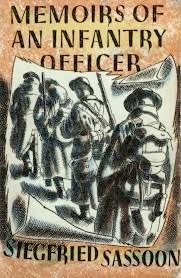
Orwell knew at least two of the authors – Henri Barbusse and Max Plowman had helped him early in his writing career. Here are those books listed by date of publication.
|
Title |
Author |
Date of Publication |
|
Le Feu (in English, Under Fire) |
1916 (French), 1917 (English translation) |
|
|
A Subaltern on the Somme |
1927 |
|
|
1927 (German), 1929 (English translation) |
||
|
1929 |
||
|
1929 |
||
|
1929 |
||
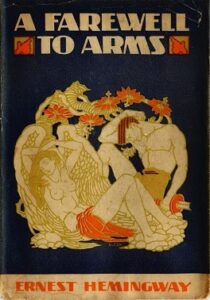
In his list of seven titles Orwell included a German author and a French, an American and four British.
Did these books have a predecessor? In the same year that his essay ‘Inside the Whale’ was published Orwell reviewed a memoir of a French NCO who had served with Napoleon Bonaparte in Tribune (29 March 1940). In his review of Memoirs of Sergeant Bourgogne 1812–1813 Orwell began:-
‘It was only comparatively recently that the truth about war began to be looked on as printable, and Sergeant Bourgogne’s Memoirs, written in 1835, is probably the earliest realistic war book in existence. Other rather similar books were published at about the same time, but most of them are known to be fakes, whereas the truth of Bourgogne’s story is obvious in every line he writes.’
And Orwell concluded with a recommendation:-
‘… no one has left so graphic and convincing an account as this simple-minded soldier who, without knowing it, was the grandfather of a modern school of literature.’
Tabulated 2025
Orwell. Genius for the ages. How frightening that everything he wrote about is happening now, in its full-blown ugliness
. How frightening that everything he wrote about is happening now, in its full-blown ugliness