
Going Deep In
Or, Another George
*
In Inside the Whale (1940) Orwell discussed the three literary generations that had existed in Britain in his lifetime i.e. the Housman era Nature Poets, the Joyce-Eliot Despair of Life writers, and the Stalinist pro-Russians. He wrote that at any given moment of course there is a huge tribe of Barries and Deepings and Dells who simply don’t notice what is happening.
My previous article looked at Orwell and Ethel M. Dell. Here I look at Orwell and George Warwick Deeping. In another I will look at Orwell and Sir James Matthew Barrie of Peter Pan fame.
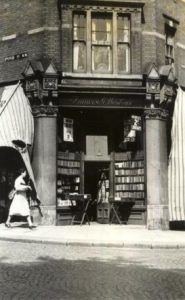
Orwell and Deeping. In the 26 September 1935 New English Review, Orwell reviewed several novels. He writes that If one is reviewing a novel by, say, Dell or Deeping it will not do to write it off, snootily and unhelpfully, as a piece of tripe. In his article ‘Bookshop Memories’ (Fortnightly, November 1936) Orwell writes that Deeping was the second most popular author in the circulating library run by a North London bookshop Booklover’s Corner.
George Orwell mentioned Deeping in chapter one of Keep the Aspidistra Flying writing that
Mrs Weaver nosed among the books, too dim witted to notice that they were in alphabetical order.
‘I don’t know what to ‘ave this week, that I don’t’ she mumbled through untidy lips. ‘My daughter she keeps on at me to ‘ave a try at Deeping. She’s great on Deeping, my daughter is. But my son in law now e’s more for Burroughs. I don’t know, I’m sure’.
In the original version of Keep the Aspidistra Flying Orwell called Ethel M. Dell and Warwick Deeping’s books garbage. Victor Gollancz who published it in 1936 pragmatically cut this remark. It was re-instated in the Orwell Collected Works.
George Orwell in his article ‘Lear, Tolstoy and the Fool’ (Polemic, March 1947), wrote that Nor is there any way of definitely proving that – for instance – Warwick Deeping is bad. In a 4 February 1949 letter to Sir Richard Rees, written from a Cotswold Sanatorium, Orwell writes that, Among other things I read a Deeping for the first time – actually not so bad as I expected, a sort of natural novelist like A.S.M. Hutchinson.
Although Orwell admitted to reading a Deeping novel in a sanatorium no Deeping novels are mentioned in Orwell’s 1949 reading list. Perhaps he was too embarrassed to mention having enjoyed reading a book by a novelist who the literati looked down on and who Orwell had sneered at.
George Warwick Deeping was born in Southend on Sea in Essex on 23 May 1877 the only son and oldest of the three children of George Davidson Deeping JP a GP, Admiralty Surgeon, Medical Officer of Health and magistrate; and Marianne Deeping nee Warwick a surgeon’s daughter. The family had three servants.
Warwick Deeping had a happy childhood playing cricket, collecting blackberries and paddling in the sea; but his younger sister Constance Eleanor died in infancy in 1885. He was educated at home and at Merchant Taylor’s School in London; read science and medicine at Trinity College, Cambridge; trained at Middlesex Hospital in London; qualified as a doctor in 1912; and practised for a year becoming a full time writer in 1913.
Warwick Deeping began writing poetry aged twenty but switched to writing novels and short stories. His first novel Uther and Igraine an Arthurian romance was published by Grant Richards in 1903; and dedicated to Deeping’s fiancée Maude Phyllis Merril the daughter of Captain Jacob Merrill a cavalry officer. Warwick Deeping married Maude Merrill in 1904. The marriage was childless.
Warwick Deeping’s second novel was Love Among the Ruins (Grant Richards, 1904); his third The Seven Streams (Eveleigh Nash, 1905); and his next Bess of the Woods (Harper Brothers, 1906). In 1907 three Deeping novels were published – The Slanderers (Cassell and Co. of London); and The Return of the Petticoat and A Woman’s War (Harper Brothers). From then on Cassell was Deeping’s main publisher.
By 1914 when the First World War began Warwick Deeping had had eighteen novels published. They were mostly historical romances but he examined serious issues including gender ambiguity in The Return of the Petticoat; alcoholism in A Woman’s War; pollution of the water supply in Sincerity (1912); and rape in The White Gate (1913).
During the First World War Deeping served in the Royal Army Medical Corps (the RAMC) from 1915 to 1918 at Gallipoli, and in Egypt, France and Belgium. Three of his novels were published during it – Marriage by Conquest (1915), Unrest or Bridge of Desire (1916) and Martin Valiant (1917). After the war he mainly used contemporary settings. He had forty more novels and two short story collections published. He continued looking at serious issues.
Sorrell and Son Deeping’s first bestselling novel (Cassell, 1925) was about Captain Stephen Sorrell MC who is demobilised after the First World War suffering shell shock. His wife has deserted him in favour of a man who stayed at home and did well for himself. Captain and Mrs Sorrell’s son Christopher has been left by his mother in the care of his father.
Captain Sorrell becomes a hotel porter cleaning shoes and carrying luggage. His lower class and less educated colleagues resent his ex-officer and war hero status and bully him. He considers suicide but keeps on going to support his son for long enough for the son to qualify as a doctor. In the process the loyal father eventually obtains financial security. Cassell published the 41st edition of Sorrell and Son in 1973.
The novel inspired a 1927 American silent film directed by (Alexander) Herbert (St John) Brenon, with screenplay by Elizabeth Meehan, starring Henry Byron Warner (formerly Lickfold) as Captain Sorrell; a 1934 British talking film directed by (Wilfred) Jack Raymond (Lee) and starring Henry Byron Warner as Captain Sorrell; and a six episode 6-11 July 1984 British ITV Mini Series. In 1984 Penguin published a new edition of the book.
Other post First World War Deeping novels examined shell shock in The Secret Sanctuary (1923); social work and slum medicine in Roper’s Row (1929), The Impudence of Youth (1946) and Paradise Place (1949); and alcoholism in The Dark House (1941). Some novels examined more than one issue. The Woman at the Door (1937) looked at alcoholism, wife abuse and justifiable homicide. In The Dark House he also discussed euthanasia.
Warwick Deeping also wrote more than two hundred short stories, novellas and essays for British and American magazines including The Story Teller, The New Magazine, Cassell’s Magazine of Fiction, The Strand, the Saturday Evening Post and Adventure. In his lifetime two volumes of them were published as The Short Stories of Warwick Deeping or Stories of Love, Courage and Compassion (1929); and Two in a Train and Other Stories (1935).
Apart from Sorrell and Son four other Deeping novels were filmed – Unrest or The Bridge of Desire (1916) in 1920; Fox Farm or The Eyes of Love (1911) in 1922; Doomsday (1925) in 1927; and Kitty (1927) directed by Victor Saville in 1934. The first three were silent films but Kitty was made half as a silent film and half as a talking film. His books were popular in the USA and were translated into other languages. Sorrell and Son’s German translation sold more than 230,000 copies in Germany.
Warwick Deeping’s experiences helped inspire his writing. He understood medicine and the military. His Essex childhood inspired some novels and he called Southend Southfleet. He lived for twenty years in Sussex which inspired other novels. From 1919 onwards he and his wife lived happily together at Eastlands, in Weybridge, in Surrey, which inspired several of his novels. He was a natural storyteller as Orwell said. Literary critics disliked Deeping’s alleged sentimentality and moralising.
Warwick Deeping an individualist distrusted ruling elites and the lower classes. His interests included tennis, golf, motoring, gardening and carpentry. He disliked publicity although at Eastlands he redesigned his gardens and opened them for charity. He died on 20 April 1950 at Weybridge Hospital aged seventy two and was cremated at Weybridge Crematorium four days later. He left £3,675 9s 6d. His wife died in 1971 aged eighty nine.
Six Warwick Deeping novels were published posthumously between 1952 and 1957. A six volume collection The Lost Stories of Warwick Deeping was published between 2013 and 2018.
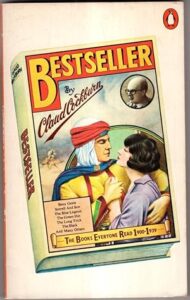
George Orwell was dismissive of Warwick Deeping though the evidence suggests that Orwell was more inspired by snobbish literary critics than by what Deeping actually wrote. Graham Greene disliked Deeping’s books believing that they were untruthful to life and dull. Kingsley Amis initially disliked Sorrell and Son but later said that Deeping’s sensibility was very crude but it delivered (Sunday Times, 31 March 1996). A more detailed study is Bestseller: The Books Everyone Read 1900-1939, by Claud Cockburn. (1971), which discusses two of Deeping’s novels, including a chapter on Sorrell and Son, with more on A.S.M. Hutchinson. Cockburn – a political opponent of Orwell in his lifetime – takes a position close to Orwell.
The A.S.M.. Hutchinson who Orwell called a natural writer was Arthur Stuart Menteth Hutchinson (1879-1971). He is worth an article in his own right. Cassell is still a publishing house and is part of the Octopus Publishing Group.
Leave a Reply