
Going For Gould
Introduction. Gerald Gould was important in George Orwell’s life although they may never have met. As Chief Reader for the publisher Victor Gollancz in the early 1930’s Gould was involved in editing Orwell’s early books. On 17 December 1934 Orwell wrote a letter to Victor Gollancz about possible changes to A Clergyman’s Daughter; and listed sixteen changes that Gould, and Harold Frederick Rubenstein, a solicitor, playwright, author and literary critic, had recommended. Orwell made some changes, compromised over others and stood firm on some points.
The August 1935 Adelphi carried an Orwell review of Amy Cruse’s The Victorians and their Books.. He wrote that:
It may be rather hard to believe, after a course of [Hugh] Walpole and [Gerald] Gould, but the Victorians took their novels quite as seriously as we do.
In his article, “In Defence of the Novel”, (New English Weekly, 12 and 19 November 1936) Orwell wrote that:
Having started with the assumption that all novels are good, the reviewer is driven ever upwards, on a topless ladder of adjectives. And Sic Itur Ad Gould. You can see reviewer after reviewer going the same road. Within two years of starting out with at any rate moderately honest intentions, he is proclaiming with maniacal screams that Miss Barbara Bedworthy’s “Crimson Night” is the most terrific, trenchant, poignant, unforgettable, of the earth earthy and so forth, masterpiece, which has ever, etc. etc. etc. There is no way out of it when you have once committed the initial sin of pretending that a bad book is a good one. But you cannot review novels for a living without committing that sin.
In a 1938 letter to Jack Common about reviewing and boosting books Orwell wrote:
I admit that this business of sending books out to be boosted which W. (the publisher Warburg) has now done to me 3 or 4 times, makes me a bit uneasy. The trouble is I’ve always got at the back of my mind a picture of myself as a sort of Gerald Gould, selling my intellectual virtue at ever decreasing prices.
Early Life. Gerald Gould was born in Scarborough on 9 April 1885, one of the three children of Cecil Arbuthnot Gould and Alice Emily Gould née Joyce. Cecil Arbuthnot Gould was born in London in 1850, one of the thirteen children by three wives of the American born Robert Howe de Tracy Gould. The family had lived in France and Germany.
Cecil Arbuthnot Gould learnt French and German and taught them at State Secondary Schools in Scarborough and then in Norwich. He married Alice Emily Joyce on 1 July 1880; and died at Norwich on 16 November 1909. Their oldest son Captain Cecil Arbuthnot Gould of the 5th Battalion of the Essex Regiment was killed in action, aged thirty two, on 26 March 1917 at the First Battle of Gaza. This was part of the First World War Palestine campaign.
Gerald Gould studied as a day pupil at Bracondale School, a Norwich private boys’ school which operated from 1821 to 1993; at University College, London, getting a first in Classics in 1905; and at Magdalen College,Oxford, getting a first in Humane Literature in 1909. In 1909 he won the Quain Prize for an Essay on the Nature of Lyric. It is awarded annually for the best essay about English Language by a University College, English Department, student or recent graduate. It was endowed with money left by the Irish surgeon Richard Quain.
Gerald Gould was a fellow of Merton College, Oxford from 1909 to 1916. From 1910 to 1915 he taught English at Wren’s College in London. It crammed boys for entrance exams for the Royal Military College at Sandhurst which trained infantry and cavalry officers; the Royal Military Academy at Woolwich which trained artillery and engineer officers; the universities; and the Indian Civil Service. Nowadays all regular officers train at the Royal Military Academy at Sandhurst.
Walter Wren, a Liberal, founded Wren’s College. After his death in 1898 his son in law Thomas Marris Taylor ran it. It closed in 1915 when Taylor joined the Ministry of Munitions to run the training of munitions workers. Thomas Taylor later held other official posts and was knighted. He died in 1941, aged seventy.
Marriage. On 20 July 1910 Gerald Gould, twenty five, and described as a teacher of modern languages, married Barbara Bodichon Ayrton, twenty four, at East Preston Register Office in Sussex. She was born in 1886 the daughter of the electrical engineer and physicist William Edward Ayrton; and his second wife the electrical engineer, physicist and suffragist Phoebe Sarah Hertha Ayrton nee Marks.
Gerald and Barbara Gould were suffragettes and in 1912 she served a short prison term for window breaking. During the First World War, when most suffragettes worked for the British war effort, she and her mother ran the United Suffragists after the Women’s Social and Political Union closed down. The United Suffragists disbanded after women gained the vote in 1918.
After the First World War started Gerald Gould briefly worked for Charles Frederick Masterman’s War Propaganda Bureau. From 1915 to 1919 Gerald Gould was a leader writer for George Lansbury’s Labour newspaper The Daily Herald, and from 1919 to 1922 he was one of its associate editors.
A Child. Gerald and Barbara Gould’s only child Michael Ayrton Gould was born in St John’s Wood, London, on 20 February 1921; studied at a private school; and left in 1935 aged fourteen after an affair with a Frenchwoman French teacher. She was sacked. Michael’s father was summoned to the school; but was relieved having expected worse news. Michael Ayrton Gould became an artist.
The Writer. Gerald Gould had had poems published before the First World War from 1906 onwards, being a nature poet of the Housman Georgian generation. He continued writing poems during and after the First World War, published variously by Sidgwick and Jackson, Allen and Unwin, Blackwell, Collins, Ernest Benn, Cecil Palmer, Victor Gollancz. Gerald Gould wrote in the pre First World War Georgian style not the post-war despair-of-life style.
Gerald Gould’s books and essays about English Literature included The English Novel of Today (John Castle, 1924), Democritus or the Future of Laughter (E. K. Paul, Trench, Trubner and Co. and E. P. Dutton and co. London and New York, 1929) and Refuge from Nightmare (Methuen, 1933).
A Guild Socialist Gerald Gould had political tracts published by publishers such as the Labour Publishing Company which operated from 1920 to 1929. It was run by the Labour Research Department which was founded in 1912 as the Fabian Research Department. His tracts included The Coming Revolution (1920); and The Lesson of Black Friday: A Note on Trade Union Structure (1921).
Some of Gould’s poems appeared in anthologies. A year after Victor Gollancz founded his publishing house in 1928 he published an edition of Gould’s collected poems. In 1930 Argonaut Press published Gould’s Essay, “The Well Known Novel” in Essays for the Year 1929-1930.
In 1931 Gould contributed introductory material to Eyre and Spottiswoode’s The Fothergill Omnibus – For which seventeen eminent authors have written short stories upon one and the same plot. John Rowland Fothergill a South Wales ironmaster’s son, one-time bisexual dilettante, and then a publican and writer, keeping The Spread Eagle in Thame, Oxfordshire, and, later, the Three Swans in Market Harborough, first published his own Innkeeper’s Diary that same year.
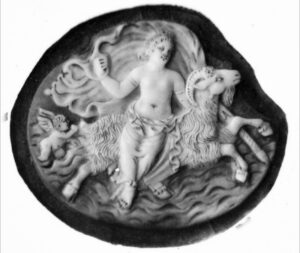
The following year Gollancz published Gould’s novel Isabel. His Times obituary called it a remarkable study of a kind of incarnation of Aphrodite Pandemos. While Aphrodite was the Greek Goddess of Love, Aphrodite Pandemos was specifically the goddess of sensual love.
The Politician. Barbara Bodichon Gould née Ayrton was a Labour Party member. In 1919 she was appointed Daily Herald Publicity Manager. She held the post until 1921 when Michael Ayrton Gould was born.
Barbara Gould was an unsuccessful Labour Parliamentary candidate for Lambeth North (1922), Northwich, Cheshire, (1924, 1929 and 1931), and Hulme, Lancashire, in 1935. She was briefly Labour Party Women’s Officer, in 1929 was elected to the Labour National Executive Committee, in 1932 briefly edited Labour Women, in 1936-1937 was on the Labour Distressed Areas Committee, in 1938 was elected Labour Party Vice-Chair, and in 1939-1940 was its Chair.
Barbara Gould had interests outside party politics. From 1921 to 1923 she was the National Society for Lunacy Reform Organising Secretary. In 1929-1931 she sat on the Royal Commission on the Civil Service and supported equal pay for women civil servants. She supported the Peace Movement.
Compromise with Mammon. At any one time the number of Britons who can live and support a family from poetry can be counted on the fingers of one hand. Writing Labour political tracts does not make money. His wife’s political activities would cost, not make, money.
Gerald Gould made his living by reviewing books for The Observer and the New Statesman He became Gollancz’s Chief Reader but continued reviewing. Some of Gould’s articles for these journals were published as essay collections. He could not afford to be too harsh on the authors he reviewed. Newspapers and magazines, especially quality ones, were largely supported by advertising, especially from publishers.
The End. Gerald Gould died on 2 November 1936, aged fifty one, at 6 Hamilton Terrace in North Marylebone. The cause of death was given as diabetes, bronchial pneumonia and a pulmonary oedema. He had once been a healthy young man who enjoyed tennis but he had been ill for some time. His doctor Joan Graeme Malleson née Billson informed the authorities of his death.
Barbara Gould was elected North Hendon Labour MP in 1945. She was a hard-working back bench MP who spoke in debates, asked questions and sat on Select Committees. She hated injustice and was especially interested in food rationing, and child cruelty and neglect issues. She was a member of the Arts Council and the British Council. A Conservative defeated her at the 1950 general election. On 15 October 1950 Barbara Gould died aged sixty four at her London home.
Michael Ayrton Gould, the artist, in 1952 married the cookery writer Elisabeth Balchin née Walshe. She had left her first husband, the writer Nigel Balchin, for him. Michael and Elisabeth Gould’s marriage was childless, but he acquired three step children from her previous one. Using his mother’s maiden name he called himself Michael Ayrton. A diabetic, he died on 16 November 1975 aged fifty four, but of a heart attack.
Exception. Gerald Gould is in a strange position historically. His wife, his mother and father in law, some of their relatives, his son and daughter in law, and his daughter in law’s first husband have Dictionary of National Biography entries. Gerald Gould does not. Perhaps readers could contact Dr Mark Curthoys, the Dictionary of National Biography Nineteenth and Twentieth Century editor, and asked him if that shouldn’t be rectified.
Leave a Reply