
Orwell and Pritt
*
Introduction. George Orwell’s Collected Works include numerous references to D. N. Pritt i.e. Denis Nowell Pritt KC. Here I look at them. In a subsequent article I will look at the life of D. N. Pritt a remarkable man with a massive blind spot.
Facing Unpleasant Facts. In his Diary of events leading up to the war Orwell noted on 27 July 1939 that the MPs (19) who voted against the IRA bill included Gallacher, Pritt, Cripps.
The IRA launched a terrorist campaign in Great Britain in January 1939. It continued into 1940. It was ostensibly directed against property but there were civilian casualties. At Coventry on 25 August 1939 five people were killed and seventy injured. There were links between the IRA and the Abwehr (Nazi Military Intelligence).
Neville Chamberlain’s government in July 1939 introduced the Prevention of Violence (Temporary Provisions) Act. It became law in August 1939 and authorised the internment and deportation of IRA suspects without trial. Under its provisions 119 people were deported to Ireland. At its second reading on 24 July 1939 218 MPs voted for it and seventeen against plus Pritt and Sydney Silverman the tellers for the noes. William Gallacher was the one open communist MP.
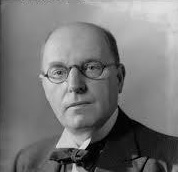
A Patriot After All. In an 11 April 1940 letter to (Arthur) Humphry House, a literary scholar and Dickens expert, Orwell described how Sir Richard Acland a Liberal MP and an almost complete ass, though of course well-meaning enough, had in his book Unser Kampf effectively called for Britain to surrender; had become the tool of hired liars like Pritt; and is apparently not capable of seeing that Nazi propaganda in this country has to pose as Russian propaganda.
On 8 April 1941 Orwell wrote in a letter to the Reverend Iorwerth Jones a Swansea Congregationalist minister replying to a letter from him about Orwell’s book The Lion and the Unicorn that:
Of course I am in favour of declaring our war aims, though there is a danger in proclaiming any very detailed scheme for post-war reconstruction, that Hitler, who is not troubled by any intention of keeping his promises, will make a higher bid as soon as our war aims are declared. All I protested in the book was the idea that propaganda without a display of military strength can achieve anything. Acland’s book “Unser Kampf” which I referred to seemed to assume that if we told the Germans we wanted a just peace, they would stop fighting. The same idea is being put about, though in this case not in good faith, by the People’s Convention crowd (Pritt and Co.).
D. N. Pritt was not a hired liar. Following the communist line cost him dearly financially for he lost most of his commercial clients; and politically. He lost the Labour Whip for his pro-Russian line during the Russo-Finnish War and never regained it. This cost him his chance to be a law officer in the 1945-1951 Labour government. His politics eventually destroyed his political career.
All Propaganda is Lies. In his war time diary entry for 19 April 1942 Orwell wrote that Fyvel (Raphael Joseph Feiwel alias Tosco. R. Fyvel a Zionist writer and editor), told me how in 1940 when Chamberlain was still in the government he (Fyvel) was at a meeting at which Pritt and various Indians were present. The Indians were remarking in their pseudo-Marxist way “Of course the Churchill-Chamberlain government is about to make a compromise peace”, whereas Pritt told them that Churchill would never make peace and that the only difference (then) existing in Britain was the difference between Churchill and Chamberlain.
Although he had lost the Labour Whip by the time of the above meeting Pritt was still an Independent Labour MP. Whatever Pritt’s faults he knew that Churchill was a resolute opponent of Hitler.
I have tried to tell the truth. The 31 December 1943 Tribune in Orwell’s As I please column quoted a letter from Pritt which read: I read in your issue of the 17th that:
The people who demonstrated most loudly against Mosley’s release were the leaders of the now defunct People’s Convention, which at the time Mosley was interned was running a “Stop the War” campaign barely distinguishable from Mosley’s own.
Let me correct some of the inaccuracies in this. Firstly the People’s Convention never ran a Stop the War campaign, nor any campaign which could possibly be so described. The position that it did has been occasionally put forward by some of the worst elements of our various political groupings, but on every occasion when challenged, they have failed to produce any evidence because there is none.
Secondly the People’s Convention was not running any campaign of any kind when Mosley was interned, because it did not then exist. Mosley was interned in May 1940, and the People’s Convention was not born until two months later.
George Orwell replied that although the People’s Convention was not set up until after Mosley was interned, the people responsible for this Convention (communists and fellow travellers) had run a Stop the War campaign since autumn 1939. He continued:
As for failing to produce any evidence of defeatist activities by the People’s Convention a whole book “The betrayal of the left” was published by Gollancz exposing the anti-war campaign of the People’s Convention and was not challenged on any point of fact by the Convention’s supporters. In any case the promptitude with which the People’s Convention was buried when the USSR came into the war, is sufficient to stamp it for what it was – an activity objectively useful to the Axis. Some of us have longer memories than Mr Pritt seems to imagine.
The autumn 1944 Partisan Review an American journal carried Orwell’s 24 July 1944 London letter. He wrote that: It may possibly be of some significance that the Soviet Press recently made a sharp attack on a group of very Russophile left wing MPs who had made the suggestion that the flying bombs were manufactured in Spain. These MP’s included D. N. Pritt, the alleged “underground” Communist who has been perhaps the most effective pro Soviet publicist in this country.
There had been a House of Commons debate about this on 5 July 1944. Three Labour MP asked for confirmation of 24 June 1944 Radio Moscow reports that V1 flying bombs were made and tested in Spain. The Foreign Secretary Eden denied this but admitted that the Germans had supplied equipment to Spain to make explosives.
D. N. Pritt asked: Would not the Right Honourable Gentleman (Eden) consider this suggestion? He was asked to get information about a story which comes from an ally of some importance, and the only person he does not ask is that ally, who may know something about it. Will the Right Hon. gentleman also remember, since he is very firm about his knowledge of Spain, that he once told us that there were no Italian troops in Spain?
The Russian protests about the pro-Russian MPs who spoke in this debate were probably because they had made their claims on the basis of a Radio Moscow broadcast. They should perhaps have checked with the Russian Embassy first.
I belong to the Left. In his essay Notes on Nationalism (Polemic, October 1945) Orwell wrote that: In real life, Lord Elton, D. N. Pritt, Lady Houston, Ezra Pound, Lord Vansittart, Father Coughlin, and all the rest of their dreary tribe have to be fought against but their intellectual deficiencies hardly need to be pointed out.
The 1 July 1945 Observer printed Orwell’s report of the General Election campaign. At Hammersmith North an official Labour candidate was standing against D. N. Pritt the sitting Independent Labour MP who locally had a good record; and a Conservative candidate. George Orwell wrote that having two Labour candidates might let the Conservative win. D. N. Pritt won in 1945 but an official Labour candidate defeated him in 1950.
It is what I think. The 29 March 1947 American journal The New Leader carried an article by Orwell about James Burnham’s book The Struggle for the World. George Orwell partially agreed with it but thought that Burnham over-estimated Communist strength in democracies. To quote Orwell:
There is also the question of the “fellow travellers”, “cryptos” and sympathisers who further the aims of the Communists without having any connection with them. Burnham does not claim that these people are all crooks or conscious traitors, but he does seem to believe that they will always continue in the same strain, even if the world situation deteriorates into open warfare. But after all the disillusioned “fellow traveller” is a common figure like the disillusioned communist. The important thing to do with these people – and it is extremely difficult since one has only inferential evidence – is to sort them out and determine which of them is honest and which is not. There is for instance a whole group of MPs in the British parliament (Pritt, Zilliacus etc.) who are commonly nicknamed “the cryptos”. They have undoubtedly done a great deal of mischief, especially in confusing public opinion about the nature of the puppet regimes in Eastern Europe; but one ought not to hurriedly assume that they are all equally dishonest or even that they all hold the same opinions. Probably some of them are actuated by nothing worse than stupidity. After all such things have happened before.
For instance some Conservative MPs admired fascism before the Second World War. However most of them were patriotic during it. George Orwell believed that Burnham had over-estimated communism’s real strength.
While on Jura in August or September 1947 Orwell wrote a letter to Tribune that was not published. It defended Konni Zilliacus the Labour, alleged crypto- communist and Zionist MP, who had criticised Tribune for sitting on the fence on the America versus Russia issue. George Orwell wrote that:
With a government headed by Pritt and Zilliacus we could have no doubt excellent relations of a kind with Russia; and with a government headed by Churchill and Beaverbrook we could probably patch up some kind of arrangement; but any government genuinely representative of the Labour movement must be regarded with hostility. This was because: Social Democracy, unlike capitalism offers an alternative to capitalism.
>George Orwell was criticising Tribune for havering. Most Tribune readers by 1947 were beginning to see Stalin for what he was but they disliked American capitalism. At this date Zilliacus wanted it to come down on the Russian side. George Orwell wanted it to side with democracy.
Our Job Is To Make Life Worth Living. In a 17 April 1949 letter to Sir Richard Rees Orwell wrote that he felt completely certain that D. N. Pritt was a crypto-communist. In a 2 May 1949 letter to Rees Orwell wrote that some Labour left wingers were useful to the Russians but would probably not betray a military secret to them. However a real communist would of course hand the secret over without any sense of guilt and so would a real crypto such as Pritt.
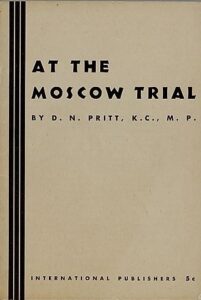
On 2 May 1949 Orwell sent Celia Kirwan at the Foreign Office Information Research Department a list of 135 communist party members and actual or probable crypto communists. D. N. Pritt was mentioned twice. Firstly in the entry for open communists William Peyton Coates and his wife Zelda Coates it is noted that W. P. Coates compilation on the trial of Vitviskii (1933) had a foreword by D. N. Pritt.
At this trial six British employees of Metro-Vickers and some Russians including N. P. Vitvitsky were accused by the Russians of espionage and wrecking i.e. sabotage. No death sentences were imposed. Some of the British accused were given prison sentences but they were released after the British government imposed trade sanctions on Russia.
Secondly in the entry for Pritt Orwell describes him as:
MP (Independent – expelled Labour Party) for West Hammersmith (sic). Barrister. Author of many books, pamphlets etc. “Choose Your Future”, issued 1940, withdrawn 1941.
Almost certainly underground member. Said to handle more money than is accounted for by his job. Good MP (i.e. locally). Very able and courageous.
Conclusion. George Orwell regarded Pritt as dangerous but nevertheless somewhat respected him.
Anybody researching the political scene of Britain from the 1930s to the 1950s would have encountered Denis Nowell Pritt, KC. My description of him as ‘a budding British Vyshinsky’ is perhaps a bit over the top, considering that he did take up some important civil liberties cases. But it cannot be honestly denied that the cases he did take up were ones of which Moscow would have approved, and he certainly not only would not have taken up the case of anyone on trial in the Soviet Union, but would have endorsed both the charges and the verdict in any such instances. For Pritt, the Moscow Trials were exemplary examples of justice. As the Old Bolsheviks met their sad fate, EH Carr sarcastically wrote off both Pritt and the trials themselves, by calling him ‘a skilful enough advocate to be able to impart some shreds of plausibility to the most hopeless case’.
It is little surprise that Pritt was the main defender of Soviet foreign policy in Britain during that ticklish period for Moscow’s friends whilst the Molotov–Ribbentrop Pact ran its course. It was as if they knew that the justification of Soviet foreign policy now required the employment of a legal mind skilled in arguing in favour of dodgy defendants. And his justifications of the Pact, of the partition of Poland with Nazi Germany and of the attack on Finland can be boiled down to this: if the imperialists could play dirty (as no doubt they did), then why not Moscow?
Back to my ‘budding British Vyshinsky’ quip. Imagine that Britain had become a People’s Democracy like, say, Czechoslovakia. Here we are in 1952, in the People’s Court. In the dock is Harry Pollitt, former General Secretary of the Communist Party of Great Britain, now in disgrace. Holding forth is D N Pritt, the Minister of Justice, condemning Pollitt for all manner of deviations, not least his refusal to obey the Comintern edict in October 1939 to change the party line into opposing British involvement in the Second World War, and for his clandestine relationship with Rose Cohen, convicted in the Soviet Union for treason. With a rhetorical flourish, Pritt declares Pollitt guilty, and the latter faces his fate…