
That Frightful Drilling
When I’ve mixed with chaps from the upper classes, as I did during the war, I’ve been struck by the fact that they never really get over that frightful drilling they go through at public schools.
George Orwell, Coming Up For Air (1939)
*
Richard Beard’s Sad Little Men: Private Schools and the Ruin of England does not have an index, but my notes suggest that George Orwell is mentioned fifteen to twenty times. Add the people with whom Orwell was associated, such as T C Worsley, and you’re probably not going to read more than ten pages without a comment from one of them. There is a very good reason for that: Beard suggests that his experience, and that of his contemporaries who are now our political and social leaders, is little different to that described by Orwell and Worsley. Beard also suggests that Orwell’s comments on the limits of traditional middle- and upper-class education (preparatory school and then public school) are still relevant.
In 1923 when George Bernard Shaw “advocated razing the public schools and ‘sowing their foundations with salt’, he meant the usual suspects – Eton, Harrow and Winchester – but also their ‘cheaper and more pernicious imitators’.” (Beard p3). Beard mentions this to argue that his own school was not ‘more pernicious’, but he could find more in Orwell to argue the same point. In his essay “Boys’ Weeklies” (1940) Orwell repeatedly returns to the propagandist function of school stories as a defence of the existing school system: “Their real function is to allow the boy who goes to a cheap private school (not a Council school) to feel that his school is just as ‘posh’ in the sight of God as Winchester or Eton.”
Richard Beard quotes from two of T C Worsley’s books, but not, unfortunately, from the one commissioned by Orwell and Tosco Fyvel for the Searchlight Books series, The End of the “Old School Tie” (1941: the first printing was destroyed completely by Nazi bombs, it is a rare book to locate). In his Foreword Orwell writes that Worsley “is not so uncompromisingly hostile to the Public Schools as most people of Left-wing opinions” (Worsley p 5), but one can read a major hostility to all of English and Welsh education (Scotland has always worked differently) a few pages later when Worsley writes: “Apart from those who are at the Public Schools, the majority of this small group [who stay on after 14] proceed to State Secondary Schools. And the education they receive there is a modified form of Public School education” (Worsley, p15). Beard has the figures for the present day: “Privately educated children today account for 7 per cent of the school population of England, though the percentage of boarders has decreased to a single per cent” (Beard p24).
The consequence as far as Orwell and Worsley were concerned was “Probably the battle of Waterloo was won on the playing-fields of Eton, but the opening battles of all subsequent wars have been lost there” (Orwell regarded this observation as so important that he repeated it in his Introduction to the Ukrainian edition of Animal Farm), while Worsley wrote “the men who led the British people between the two wars have all one thing in common – they have received the same kind of education. The ruling class of England for the last twenty or thirty years has been drawn from the Public Schools” (Worsley p10). Scattered across two pages Worsley lists the Public Schools attended by the Conservative leaders of the 1930s: “Baldwin from Harrow, Chamberlain from Rugby, Halifax from Eton” but he then goes on to point out that the current leaders of industry, politicians and upper Civil Servants, armed forces chiefs, bishops and barristers are all from the same background (Worsley p10-11).
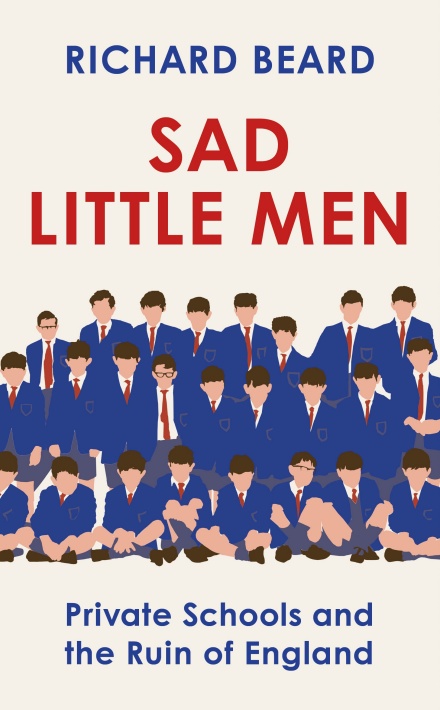
Beard has the figures from the twenty-first century: the Army Chief of Staff and the Archbishop of Canterbury are Old Etonians, and using the wider term ‘boarders’ he includes the country’s highest police officer, the Chief Inspector of Schools, the Chief Medical Officer, the chairman of the BBC and the head of MI6 (Beard p18-19). In fact (and this is the premise of the book), “Seventeen out of twenty-six members of [Boris] Johnson’s full Cabinet in 2020 went to private school (Beard p20). What strikes Beard as more extraordinary is that after Alec Douglas-Home lost office in 1964 no public school boy held highest office for forty-five years, until 2010 saw the return of the first of two Old Etonians. If social progress is defined as the achievement of the most able from any school in the country then there has been so little that we may have regressed.
Orwell’s childhood is the model for that of the boys that concern Beard most (himself, David Cameron, Boris Johnson, and all the other leaders of society): prep school (St Cyprian’s in Eastbourne in Orwell’s case, Pinewood in Beard’s; he names Cameron’s and Johnson’s schools too), then public school. Beard was the son of a small businessman, Orwell of a minor Indian civil servant. Orwell’s family, though, must have been the poorer: he only maintained his places via scholarships but the pressure from school (and presumably home) to win them must have been tremendous. Orwell studied for Harrow (mentioned in “Such, Such Were the Joys”), achieved a scholarship and went to Wellington, ultimately to reach Eton through a byzantine process (he had the scholarship but these were apparently offered without a place being available: this was not new. M R James in his memoir Eton and Kings makes it clear that this was happening already in his time – the 1880s).
Orwell’s references to his own secondary education are scattered: they can be found in the second part of The Road to Wigan Pier, for instance, or in throw-away memories mentioned in his “As I Please” columns in Tribune, and his book reviews (his 1945 review of Lawrence’s The Prussian Officer mentions picking up a copy of the English Review in his schoolmaster’s study and reading a Lawrence poem for the first time). He turned his own time as a private school master into the painful experience of Dorothy Hare in A Clergyman’s Daughter, but Gordon Comstock’s memories of school, and Winston Smith’s childhood in the equivalent of a Party boarding school are both miserable. Only George Bowling’s time as a day boy at a Grammar School in Coming Up For Air is not negative among Orwell’s characters.
Orwell left a long memoir of his prep school days in “Such, Such Were the Joys”. He was 8 when he arrived and 38 when he began to record his experiences. He was 8 when the headmaster, Wilkes, beat him with a riding crop, not once but twice (the first time not being hard enough):
He continued for a length of time that frightened and astonished me— about five minutes, it seemed— ending up by breaking the riding crop. The bone handle went flying across the room. “Look what you’ve made me do!” he said furiously, holding up the broken crop.
Is it possible this happened in 1911? If “like father, like son” is true then it did. According to Beard, Wilkes’ son the Reverend J.C. Wilkes was the “Warden” (head teacher) from 1937 to 1954 of the school he later attended, where once “he [Wilkes] caned more than 150 boys in a single day in the ‘Great Gym Beating’”. On the penultimate page of Sad Little Men Beard quotes these sentences from “Such, Such Were the Joys”:
… we cannot be certain that school, at any rate boarding school, is not still for many children as dreadful an experience as it used to be. Take away God, Latin, the cane, class distinctions and sexual taboos, and the fear, the hatred, the snobbery and the misunderstanding might still all be there. (quoted Beard p 270)
Beard has his own points to make, and so does not quote the sentences which follow Orwell’s observations. Orwell went on to make a constructive suggestion:
Of one thing, however, I do feel fairly sure, and that is that boarding schools are worse than day schools. A child has a better chance with the sanctuary of its home near at hand. And I think the characteristic faults of the English upper and middle classes may be partly due to the practice, general until recently, of sending children away from home as young as nine, eight or even seven.
Beard was sent to a school near his home, but still boarded, where the school allowed parental visits twice a term. That was his parents’ choice. It is clear, though, from Orwell’s other remarks that he did not believe parents always had their children’s best interests at heart. Richard Beard seems to have come to the same conclusion. We are now – he argues – suffering from the consequences of that parental folly, yet he ends by saying “It is possible, I believe, to break the chain of infection” (Beard p 271). Given current events, he may be in a minority in that belief.
*
Books Mentioned.
Beard, Richard; Sad Little Men: Private Schools and the Ruin of England (London: Harvill Secker, 2021), ISBN13: 9781787302938
Worsley, T C; The End of the “Old School Tie” (London: Secker and Warburg, 1941)
*
“If social progress is defined as the achievement of the most able from any school in the country then there has been so little that we may have regressed.”
This is obviously not true. Even if an Old Etonian is PM (at the time of me writing this it’s a Wykehamist) then the top roles in government or in society as a whole are nowhere near as dominated by public schoolboys as they were in 1964.