
The Club Men: Part III
I think it was in ’36 that the news of the Left Book Club got to West Bletchley. I joined it soon afterwards, and it’s almost the only time I can remember spending money without Hilda protesting. She can see some sense in buying a book when you’re getting it for a third of its proper price. … it means seven and sixpenny books for half a crown (Orwell, Coming Up For Air, 1939)
Introduction. Part one of this article briefly looked at the Left Book Club and then looked at the Right Book Club. Part two looked at the National Book Association. There were also Peace and Liberal Book Clubs.
The Peace Book Club. On 10 May 1938 a page thirteen Manchester Guardian advert for the Peace Book Club, was headlined, Is it Peace? It continued The Only Way to keep informed of every factor making for peace and international co-operation is By Joining The Peace Book Club. The advert claimed that it was backed by every section of the Peace Movement. The Club Selection Committee had the following three members:
Professor C. E. M. (Cyril Edwin Mitchinson) Joad was born in 1891 a School Inspector’s son; studied at Blundell’s School, Tiverton, and Balliol College, Oxford; became a Civil Servant; married Mary White in 1915; had three children by her; deserted her in 1921; had many affairs; in 1930 was appointed Birkbeck College, London, Head of Philosophy; disillusioned with the 1929-1931 Labour government joined Oswald Mosley’s New Party; but left before Mosley renamed it the British Union of Fascists.
On 9 February 1933 Joad helped persuade the Oxford Union to vote 275 to 153 that this house will under no circumstances fight for its king and country. He initially opposed British involvement in the Second World War but changed his mind in 1940. From 1941 to 1948 he was one of the three panellists on the BBC Radio programme The Brains Trust. He died of cancer in 1953 aged sixty one.
Dr (Agnes) Maude Royden was born in 1876 near Liverpool a ship-owner and Conservative MP’s daughter; studied at Cheltenham Ladies College and Lady Margaret Hall, Oxford; did voluntary work; founded the Anglican Church League for Women’s Suffrage in 1909; became a pacifist; campaigned for women to be allowed to be ordained; toured the world; was given several honorary doctorates; renounced pacifism in 1940; and died in 1956 aged seventy nine.
(Charles) Vernon Oldfield Bartlett was born in 1894 a bank manager’s son; studied at Blundell’s School, Tiverton; joined the Dorset Regiment in the First World War; was wounded and invalided home; became a reporter; married a Belgian woman in 1917 and had two sons; was director of the League of Nations London Office 1922 to 1932; became the News Chronicle diplomatic reporter; opposed the Munich agreement; stood as an Independent Progressive at the 1938 Bridgewater by election; won the seat from the Conservatives; and held it until 1950.
During the Second World War Bartlett continued reporting and broadcast to the USA, France and Germany. In Moscow at a Kremlin dinner, emboldened by vodka, he declared that without a free press there could not be a free people. Stalin replied that young man talks too much. Vernon Bartlett retired to a Tuscan farm in 1961, made wine and continued writing. His wife died in 1966 and he remarried in 1969. He died in 1983 aged eighty eight.
The advert continued that members receive each month for two shillings and sixpence an outstanding book on the peace problem. They would otherwise cost from seven and six to fifteen shillings. It announced that the choice for May 1938 was John Martin’s Peace Adventure. This discussed the dilemmas facing pacifists.
John Hanbury Martin was born in 1890; studied at Wellington and Brasenose College, Oxford; served in the Queen’s Westminster Rifles in the First World War; in 1930 founded the Southwark Housing Association; at the 1931 General Election was the unsuccessful Labour Great Yarmouth candidate; was a Southwark Borough Councillor 1934 to 1949; was elected Southwark MP at a 1940 by election holding it until he resigned in 1948; was twice married;, and died in 1983 aged ninety two.
The advert gave the address to which to send an attached form to the Peace Book Club and get free membership. The club’s editor James Avery Joyce was born in 1902; studied Political Science at the LSE; was a barrister and opposed the Death Penalty; worked for the League of Nations and the United Nations; and was a lifelong pacifist. He died in 1987 aged eighty four.
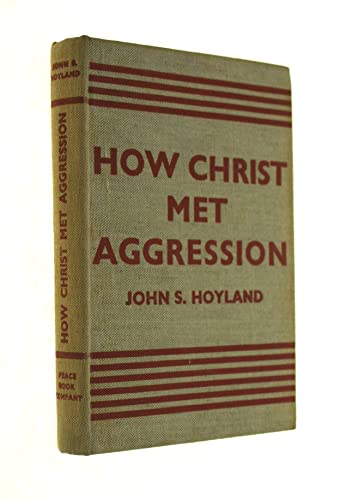
Other books the Peace Book Club issued included:
George Malcolm Stratton International Delusions (1938). He was an American psychologist and died in 1957 aged ninety two.
Sir (Ralph) Norman Angell (Lane) Preface to Peace: A guide for the plain man (1938). He was born in 1872 and was a pacifist who in 1910 had had a book published proving that a World War would be economically disastrous for all parties. In 1934 he won the Nobel Peace Prize. He opposed appeasement. In 1940 he moved to New York and encouraged good Anglo-American relations. He took the Western side in the Cold War and died in 1967 aged ninety four.
Dr L. P. (Lawrence Pearsall) Jacks Co-operation or Coercion (1938). He was born in 1860; studied at Nottingham University College; became a Unitarian Minister; edited The Hibbert Journal: A Quarterly Review of Religion, Theology and Philosophy 1902 to 1947; was Principal of the Unitarian Manchester College at Oxford 1915 to 1931; was married with six children; and died in 1955 aged ninety four.
A. (Anna) Ruth Fry. Victory without Violence (1939). She was born in 1878 into the Quaker Fry chocolate family. She was a pacifist and humanitarian who helped war victims including in the Boer War, the First World War and the Russian Civil War. In the Second World War she helped conscientious objectors. She died in 1962 aged eighty two.
Desiderius Erasmus: The instruction of a Christian Prince; Maximilien de Bethune Duke of Sully: The Grand Design of Henry IV; Hugo Grotius, The Law of War and Peace. (1940?). These were published as one volume edited by James Avery Joyce. Erasmus was a Dutch Renaissance Humanist; Grotius a Dutch legal writer known as The Father of International Law; and Sully a French government minister and political thinker who served Henry !V of France.
The last references to the Peace Book Club date from 1940. The peace movement then split. Some pacifists reluctantly supported the British war effort, others did humanitarian relief work, and hard core pacifists still opposed the war.
*
The Liberal Book Club. On Saturday 11 February 1939 the Huddersfield Examiner announced that a Liberal Book Club had been launched on Monday 6 February 1939. Nicholson and Watson, a publishing house, had co-operated with the Liberal Party in this venture.
Robert Offley Ashburton Crewe-Milnes 1st Marquis of Crewe the Liberal Book Club President was born in 1858 the 1st Lord Houghton’s only son; studied at Harrow and Cambridge; inherited his father’s title in 1885; was Secretary of State for India 1910 to 1915 with one short gap; organised the 1911 Delhi Durbar to honour George V; in 1911 was made Marquis of Crewe; was twice married (his first wife died young); and had six children. His two sons died in childhood so his title died with him when he died in 1945 aged eighty seven.
Oliver Sylvain Baliol Brett the 3rd Viscount Esher the Liberal Book Club Chairman was born in 1881 the 2nd Viscount Esher’s son; studied at Eton; was the unsuccessful Liberal Huntingdon parliamentary candidate in the two 1910 General Elections; worked at the War Office in the First World War; inherited his father’s title in 1930; chaired the National Trust General Purposes Committee; worked for many other heritage and cultural organisations; and died in 1963 aged eighty one.
The same article listed the following nineteen Liberal Book Club Patrons:
(William) Norman Birkett the lawyer
St John (Greer) Ervine the playwright
Lord Hewart i.e. Gordon Hewart the Lord Chief Justice.
Augustus (Edwin) John the painter
J. M. (John Maynard) Keynes the economist
Compton Mackenzie the writer
Dr W. R. (Walter Robert) Matthews the Dean of St Pauls.
A. A. (Adam Alexander) Milne of Winnie the Pooh fame.
Helen Simpson i.e. Helen de Guerry Browne nee Simpson a crime writer and Liberal. She wrote using her maiden name.
Lord Stamp i.e. Josiah Charles Stamp the 1st Baron Stamp a banker and economist
Viscount Leverhulme of Unilever and Port Sunlight fame
(Benjamin) Seebohm Rowntree of chocolates fame
Sir Montagu Burton the clothing chain store owner
The Duke of Montrose
Dr Sidney Berry
Viscountess Gladstone i.e. Lady Dorothy Mary Gladstone nee Paget the widow of Herbert John Gladstone the 1st Viscount Gladstone. She was President of the Women’s Liberal Federation.
Captain Basil Henry Liddell Hart MC the military historian
Mr (George) Elliott Dodds who edited the Huddersfield Examiner (see above) 1924 to 1959
Mrs (Marie Adelaide Elizabeth Renee Julia) Belloc Lowndes
The Proof of the Pudding. The first Liberal Book Club book, Ivor (John Carnegie) Browns’s Life within Reason, was published in March 1939.
Ivor Brown was born in Malaya in 1891 a Scottish doctor’s son; studied at Cheltenham and Oxford; got a double first in classics and humane literature; worked for the Home Office for two days; became a journalist, novelist and critic; was a conscientious objector in the First World War; was married but childless; was Director of the Council for the Encouragement of Music and the Arts 1940 to 1942; and died in 1974 aged eighty two.
The Club published (John) Ramsay Bryce Muir’s Future for Democracy in 1939. He was born in 1872 a Presbyterian minister’s son; studied at Liverpool University and Oxford; got a first in History and Literature; taught history at Manchester and Liverpool Universities between 1898 and 1921; wrote textbooks and popular history; was Rochdale’s Liberal MP in the 1923-1924 parliament; chaired the National Liberal Federation 1933 to 1936; never married; and died in 1941 aged sixty eight.
Another 1939 Liberal Book Club publication was Power in Men by Arthur Joyce Lionel Cary. He was born in Londonderry in 1888; studied at Clifton; attended Oxford; and got a fourth class honours degree
Joyce Cary joined the Nigerian Colonial Service; was wounded fighting the Germans in the Cameroons; on home leave married a friend’s sister and got her pregnant; returned to Nigeria; on a second home leave impregnated his wife again; and in 1920 found an agent who sold some of Cary’s stories about Nigeria to the Saturday Evening Post an American magazine. He became a full time writer and had two more children. He was not a very successful writer and he and his wife took in lodgers.
The Liberal Book Club commissioned Cary to write Power in Men about freedom and liberty which were major themes of his works. The publisher made major cuts without Cary’s approval. Joyce Cary achieved success with a wartime trilogy about change in Britain in his life time. He continued writing after the Second World War. His wife died of cancer in 1949 and he died of Motor Neurone Disease in 1957 aged sixty eight.
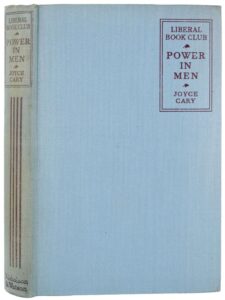
The 11 February 1939 Huddersfield Advertiser listed three more books the Liberal Book Club had commissioned. They were apparently never published and were:
Leadership for Plenty by A. S. (Arthur Strettell) Comyns Carr KC a barrister. He was an eleven times Liberal parliamentary candidate; lost ten times; and was the Islington East MP in the 1923-1924 parliament.
The Contours of Liberty by Tom (Harnett) Harrisson an ornithologist, explorer and museum curator. He set up Mass Observation in Britain during the Second World War.
These Men Make Politics by A. J. (Arthur John) Cummings a Liberal journalist and author.
The Huddersfield Examiner stated that we understand that the second batch of books will include one on “Ownership for All” by Elliott Dodds. He was plugging himself. In 1953 the Liberal Publications Department published his pamphlet with this title.
The Liberal Book club folded in 1939. In the 1935 General Election the Conservative dominated coalition had got more than thirteen million votes and a massive majority; the Labour Party more than ten million; and the Liberals more than two million votes and twenty one seats. I rest my case.
Poor old Joad. But interesting to see he went to Blundels. I’ve been there to teach Greeks.
Interesting to hear, as a writer for the Peace Book Club, of L.P.Jacks, whose “Mad Shepherds”, celebrating episodes and characters encountered in a rural, perhaps Welsh Marches, parish is a masterpiece. Professor C.E.M. Joad seems now to be forgotten as a philosopher but his books on the campaign for access to the countryside are fascinating social documents (being a nob he could patronise gamekeepers and being a rationalist he could be prosecuted for walking along a railway line on a Bank Holiday Monday, protesting that it was far safer than walking along the main road). The formation of Mosley’s fascist party by peeling off from the Labour Party seems almost a mirror image of Farage’s parties (a term simplifying accurately) and the Tories.